
Waiting for Episode 55: Kīlauea’s Changing Rhythm at Halemaʻumaʻu
We’re still watching Halemaʻumaʻu and wondering: when will Kīlauea’s next lava fountains rise above the crater?
We’re still watching Halemaʻumaʻu and wondering: when will Kīlauea’s next lava fountains rise above the crater?
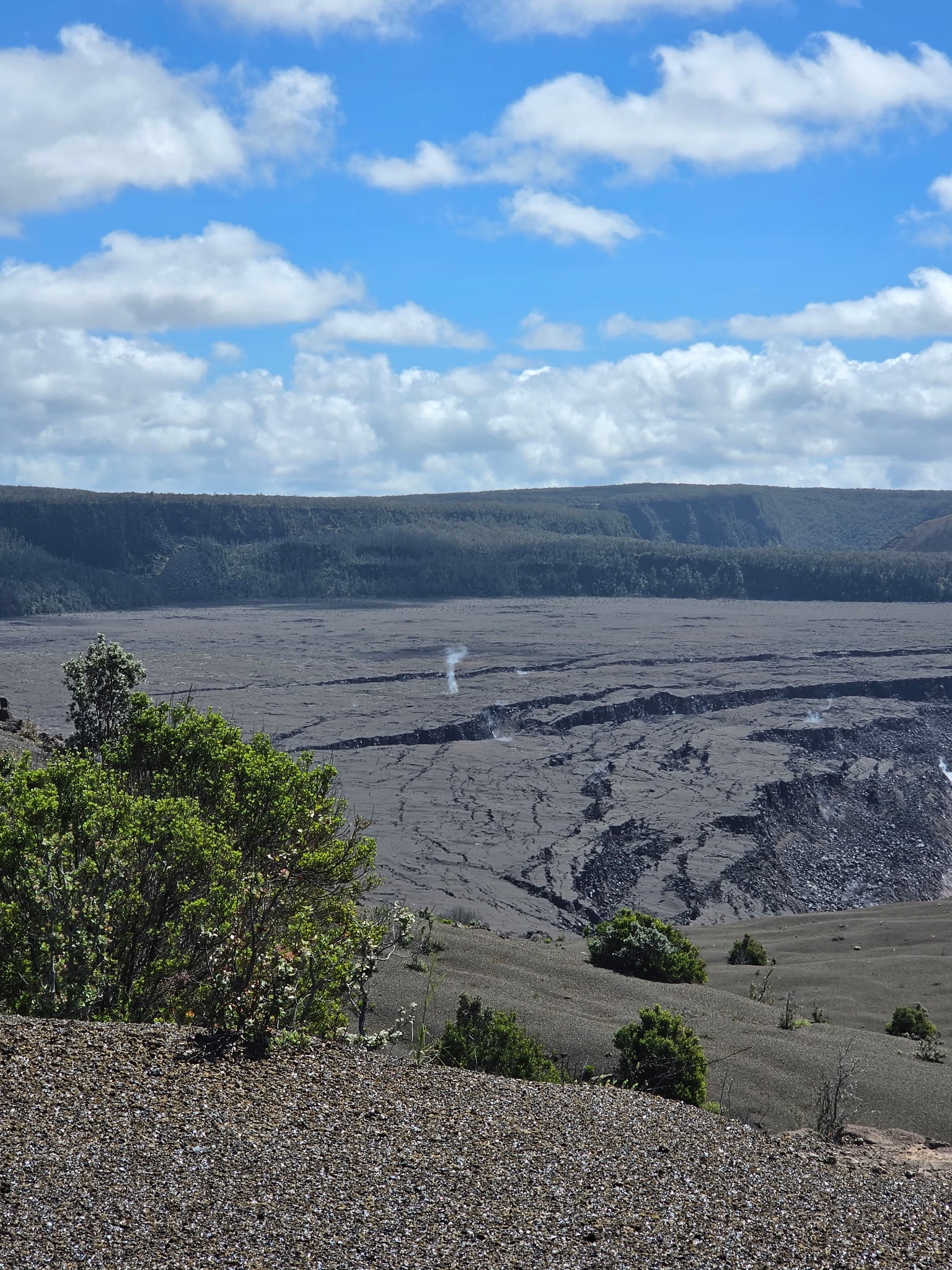
As of this morning’s USGS Hawaiian Volcano Observatory update, episode 55 has not arrived. The north vent produced minor spattering overnight, while both the north and south vents showed strong glow. The summit remains highly pressurized, but scientists cannot forecast when—or whether—another high-fountaining episode will begin. (usgs.gov) The wait has become a fascinating chapter in this eruption. Beneath the surface, magma is finding different pathways, and the familiar rhythm of earlier episodes has become less predictable. Episode 54 took place on August 25, 2026, producing approximately nine hours of continuous lava fountaining. The north vent’s fountains reached about 500 feet above ground level before stopping at 7:33 p.m. Since then, intermittent overflows and spattering have continued without developing into another major fountain event. (volcanoes.usgs.gov) For much of this eruption, scientists could follow a repeating cycle. Magma accumulated beneath Halemaʻumaʻu, pressure increased, and the summit gradually inflated. During a fountaining episode, magma escaped and the summit rapidly deflated. As inflation recovered afterward, that pattern helped HVO estimate a window for the next episode. After episode 54, the buildup became especially irregular, with repeated deflation and stretches of little or no inflation. By September 7, measurements had already exceeded the level typically associated with the start of another episode—but the expected fountains did not follow. (volcanoes.usgs.gov) Inflation and deflation describe small changes in the ground as conditions underground change. They help scientists track the magma system, but a downward trend does not automatically mean an eruption is over. Today’s measurements illustrate that: roughly one microradian of inflation was followed by a similar amount of deflation, leaving little overall change while the summit remained highly pressurized. (usgs.gov) Two recent magma intrusions help explain why this pause is different. An intrusion occurs when magma moves into underground cracks; it does not necessarily reach the surface. During September 14–16, six new vents opened on and near Halemaʻumaʻu’s northwest wall, feeding small lava flows. This happened without a major earthquake swarm or dramatic ground deformation, suggesting magma had moved through existing weaknesses. The September 30–October 1 intrusion was more forceful. Earthquakes began beneath the active vent area and migrated northeast, accompanied by rapid ground movement. Lava activity at the established vents continued during parts of this event, showing that magma could feed surface activity while also opening a pathway underground. (usgs.gov) HVO’s October 7 assessment adds another piece to the story: satellite imagery shows that the later intrusion followed fractures created during the 2018 summit collapse, with magma reaching within approximately 1,000 feet of the surface. The changing rhythm actually began before episode 54. Episodes 51–54 already showed inflation interrupted by pauses. As the vent complex grew taller, more pressure was needed to push magma out. That pressure has also allowed magma to exploit surrounding cracks. HVO additionally suggests that prolonged intermittent overflows may have allowed magma in the conduits to lose gas, potentially making another fountain episode harder to initiate. (volcanoes.usgs.gov) So, will episode 55 happen? It remains possible. But continued intrusions, new summit vents, or an eventual end to this eruption are also possible. Scientists are no longer treating every overflow as a reliable countdown to high fountains. (volcanoes.usgs.gov) At Aloha ʻĀina Tours, we’re watching with the same anticipation as our guests. We cannot promise lava fountains on a particular tour day, but the changing landscape offers plenty to appreciate and learn from. For now, we wait, follow the official updates, and let Kīlauea tell the next part of its story.
When will episode 55 be?
There is currently no reliable forecast for episode 55. Changes in magma movement and irregular inflation and deflation have disrupted the pattern scientists previously used to estimate eruption windows. Another high-fountaining episode remains possible, but it is not guaranteed. (usgs.gov)
Does deflation mean Kīlauea is running out of magma?
Not necessarily. Deflation can reflect pressure decreasing as magma erupts or moves elsewhere underground. It does not, by itself, mean the volcano is running out of magma or that the eruption has ended. HVO continues to describe the summit as highly pressurized despite recent fluctuations. (volcanoes.usgs.gov, usgs.gov)
Do the recent magma intrusions mean a bigger eruption is coming?
An intrusion does not automatically mean a larger eruption is coming. Magma can remain underground, feed new vents, or contribute to changes at existing vents. HVO is monitoring several possible outcomes, and the recent activity does not establish how large or intense the next eruption might be. (volcanoes.usgs.gov)
Wanna catch the next episode?
Join Aloha ʻĀina Tours for a small-group adventure exploring Hawaiʻi Volcanoes National Park and the beauty of Hawaiʻi Island. Book your tour at AlohaAinaToursHawaii.com—we’d love to share this incredible place with you!
Tags: Volcano, Kīlauea, Halemaumau